
Tazia Reborn: A Sacred Space Breathes Again in Zanzibar*
In the heart of Zanzibar’s Stone Town, the Husseini Taziakhana has stood as a sacred echo chamber of grief, resistance, and memory. For decades, this hall was more than a space—it was a sanctuary where devotion was not performed, but lived. Then it fell silent. Shuttered. Forgotten by some, but never by those whose hearts once beat in sync with its solemn rhythms.
Today, after 58 long years, the silence has been broken.
It began in 1912. Kassamali Dharsee—a man of remarkable vision and spiritual commitment—acquired a block of buildings in bustling Stone Town. With foresight beyond his time, he designated the upper floor for Mehfile Abbas, a space for majalis and mourning. The ground floor wasLeased to ivory traders whose rent helped fund religious life.
As Zanzibar’s commercial landscape shifted and ivory trade declined, the godowns lost their luster. But one space found new purpose—it became the Husseini Taziakhana of Zanzibar. A place where Karbala was not merely remembered—it was relived, line by line, tear by tear.
When Kassamali Bhai passed on—with no children to inherit his trust—the responsibility fell to his nephew, Mohammed Valli Dharsee, fondly known across the island as Hussein Tazia. The name itself became a symbol of unwavering khidmat.
For over 50 years, Hussein Tazia tended the space with fierce devotion. He opened its doors every single day—whether the hall filled with fifty mourners or only two. In every majlis, he led the recitation of nohas and marsiyas, keeping alive the sacred pulse of Azadari.
To the Khoja Shia Ithna-Asheri community of Zanzibar, Azadari was not just ritual—it was identity. From narrow alleys echoing with lamentations to courtyards lit with flickering lamps and verses, generations were shaped in the shadows of the Taziakhana. Children became mourners. Youth became reciters. Women held majalis with unflinching resolve. Elders became vessels of memory, reciting verses passed down like sacred heirlooms.
And from this sacred soil, a diaspora bloomed—zakirs, organizers, and spiritual leaders—who would carry the flame of Zanzibar’s Azadari to Toronto, Dar es Salaam, Leicester, and Orlando. .
Then came a night forever etched in pain.
On the eve of the 13th of Jumada al-Awwal in 1964—a night that marked the wafat of Bibi Fatema (AS)—tragedy struck. The Tazia hall was alive with the sound of masaeb, tears flowing in remembrance of the beloved daughter of the Prophet. As the majlis reached its emotional crescendo, a member of Zanzibar’s Revolutionary Council, t Mohammed Abdulla, alias Kajijore, burst into the hall with armed men.
Chaos erupted. And in an act of unthinkable violence, five innocent lives were taken:
- Sayed Abdullah Mutalib Sayed Hashem
- Sayed Ali Asgher Sayed Hussein
- Haji Abdul Hussein Remtullah
- Gulamabbas Kassamalu
- Haji Mohamad Asar
Hussein Tazia himself was shot—once in the leg, once in the forehead. Miraculously, he survived.
Sadly the sacred space was sealed overnight. The Tazia, once a cradle of communal grief and remembrance, was plunged into 58 years of silence
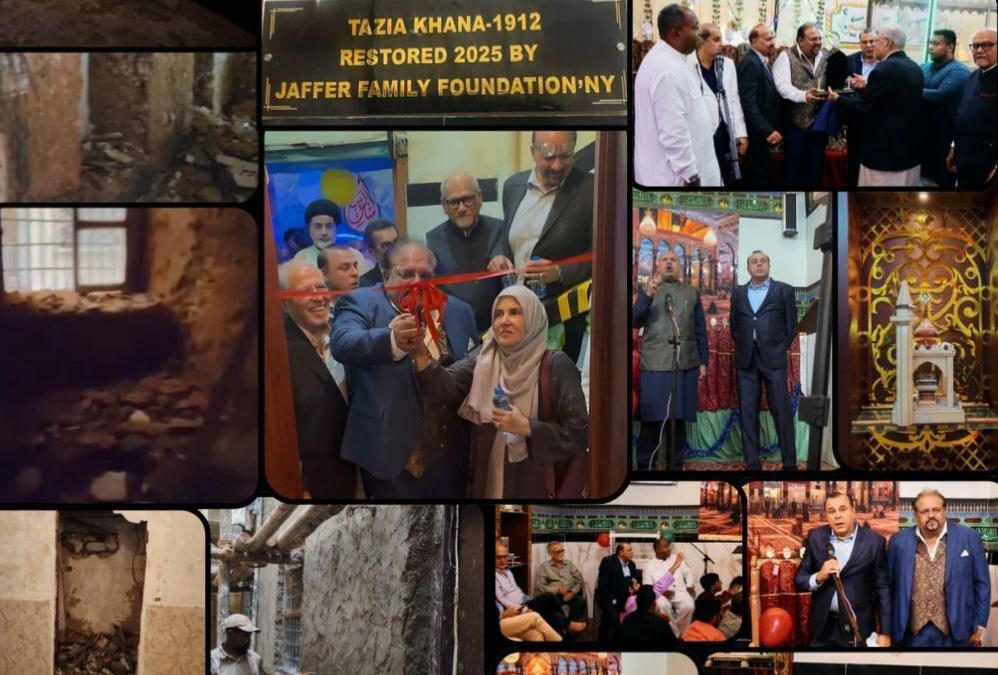
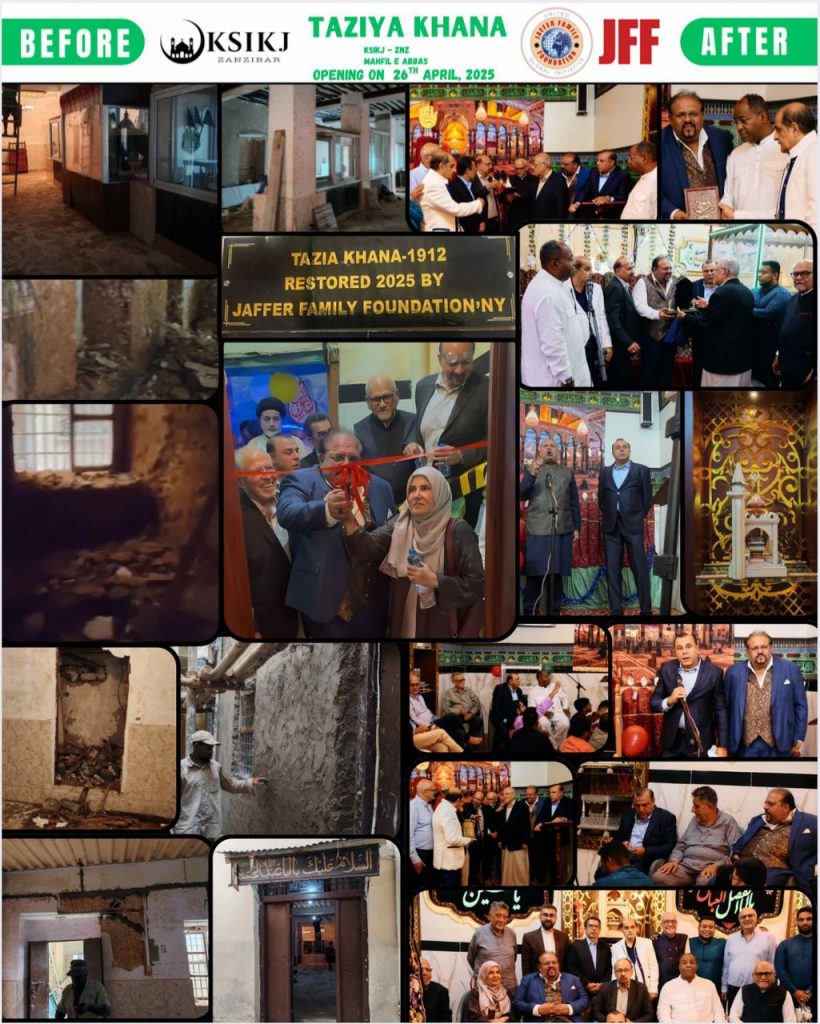
Yet sacred spaces, like sacred memories, do not die. They wait. In Dec 2024, the Jaffer Family Foundation stepped forward—not as mere benefactors, but as children of this legacy.
Mohamed Taki Jaffer, the Chairman of the foundation took painstaking care to restore the Tazia to its former glory. The goal was not modern aesthetics—but ancestral authenticity. Every creak in the wood was honored. Every whisper in the walls preserved.
“This was never just about just renovation,” Taki Jaffer explained. “It was about reviving a sacred pulse. About giving future generations a bridge to walk across time.”
Today, the Husseini Taziakhana is once again open. As a house of mourning, yes—but also as a memorial, and a movement. It holds relics of faith, records of pain, and a reverence that transcends generations. The voice of Husayn (as) resounds again beneath its rafters—steady and eternal.As Sadique Jaffer Vice President of JFF reflected: “As a family, we feel blessed to have been of service in restoring this sacred legacy—not just for our community today, but for generations yet to come .”